
More attention for the game itself
Every new game needs more than gameplay. It must respond to input, fit the screen, preserve progress and handle the material it displays. Rebuilding those foundations each time takes attention away from what makes an experience enjoyable.
The toolkit explores how shared tools and AI-assisted development can make the path to a first playable idea more repeatable. Its purpose is to support creation; whether people enjoy the resulting game is a separate question.
The toolkit supports creation; the game ideas come from young players, whose contributions remain part of the story.
What can be reused
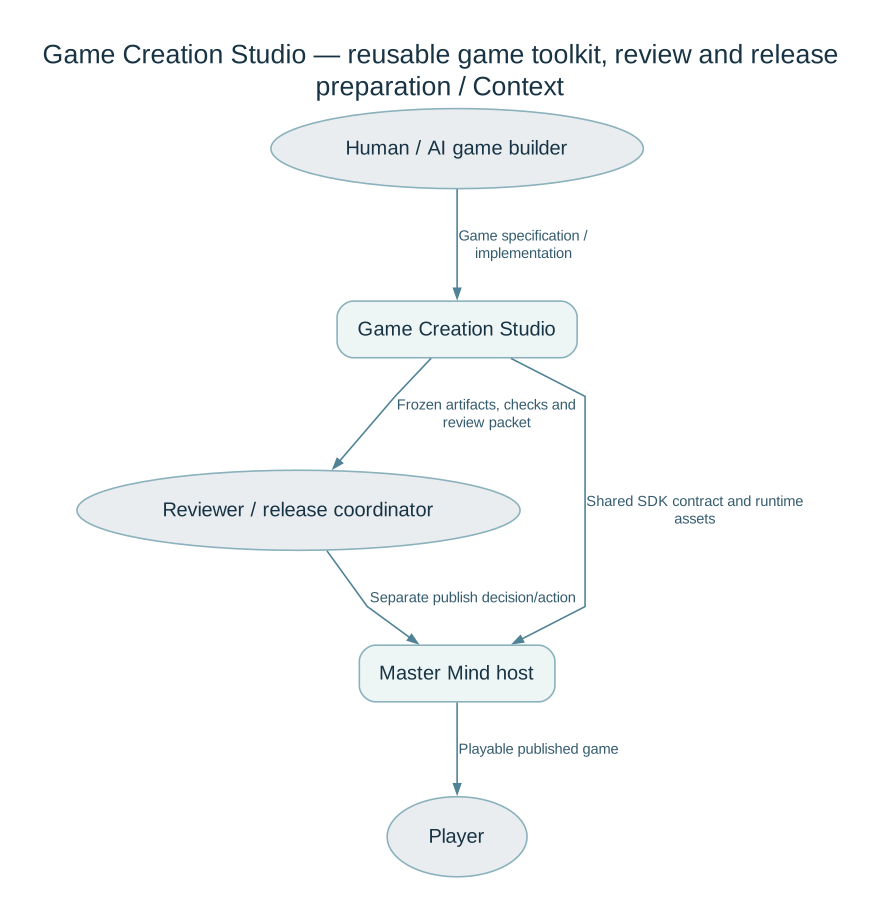
The work includes six starting templates and a shared runtime for saves, input and layout. A display filter is designed to withhold content when it cannot pass the applicable child-safety checks.
Automated checks cover the game and its supporting systems, including browser behaviour. The checks are also exercised with deliberately introduced bugs. Release preparation records an exact version of the files, while publication remains a separate human action.
From an idea to a playable release
What two pilots showed
Two AI-built pilot games reached their first all-green fast test runs 2.1 and 2.4 minutes after scaffolding. Their first passing full release-preparation runs finished 18.5 and 39.1 minutes after scaffolding.
These timings describe the recorded pilots and distinguish a fast checkpoint from full release preparation. They show what reuse made possible in those examples, rather than promise the same delivery time for every game.
A practical route into everyday life
The toolkit was developed through AI-assisted implementation and review. Its shared foundations support the games; they are not themselves the player’s experience.
The next direction is to bring useful, enjoyable games to a chosen audience and learn from that experience. Games are the current market route, with other routes open as the wider research develops. A game created with AI, an AI trained within a game and AI features experienced by players each have their own contribution to make.