
Making progress understandable
For someone directing a software project, speed is useful only when the work can be understood and trusted. Parallel agents can generate many changes, but somebody still needs to know what each change accomplishes and whether it is ready to use.
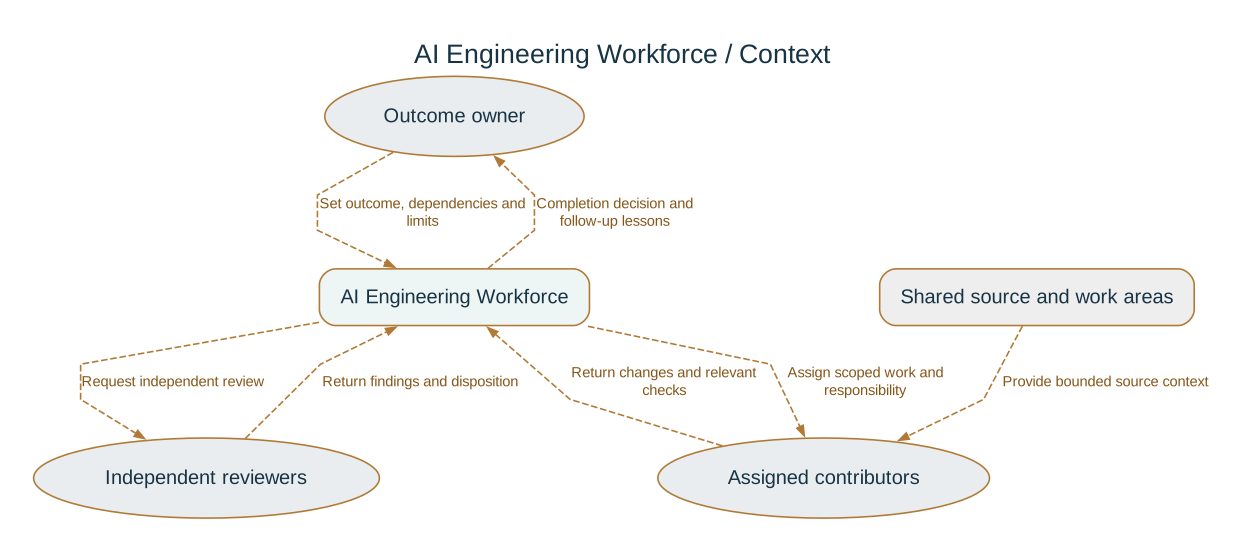
This work focuses on the operating model around delivery: how tasks are allocated, how changes are reviewed and what evidence is required before an item is considered complete.
How the work was organised
The model separates build and audit sessions. A completion decision is tied to an explicit review verdict and supporting evidence, rather than the author’s own statement that the task is done.
Leased workspaces and admission limits help coordinate concurrent work. Automated checks examine both code and claims made by governance documents, including whether a document describes a control as active when it is not. These mechanisms support the people directing the agents; they do not remove the need for judgement.
Who builds, who checks, who decides
What the recorded period shows
The recorded delivery period from May to September 2026 combines repository activity with automated workflows and required merge checks. Workflow inventory, passing checks and useful completed work answer different questions about delivery.
The record demonstrates substantial delivery activity under an AI-agent operating model. Understanding its value also requires looking at the changes themselves, the review findings and the outcomes they enabled.
The continuing question
This is a delivery chapter within the Conduir story. It connects collective intelligence to the everyday work of building and maintaining software.
The direction is to make the relationship between activity and useful outcomes easier to follow, so teams can improve their methods as well as increase their capacity.