
A useful challenge to the first answer
A model can produce a convincing explanation and still miss a defect. Asking several reviewers gives a piece of work more opportunities to be challenged, especially when the reviewers approach it differently.
The goal is better information for a decision. Agreement between models is one input; checking their claims against the work is what turns a proposed finding into an accepted one.
How the review works
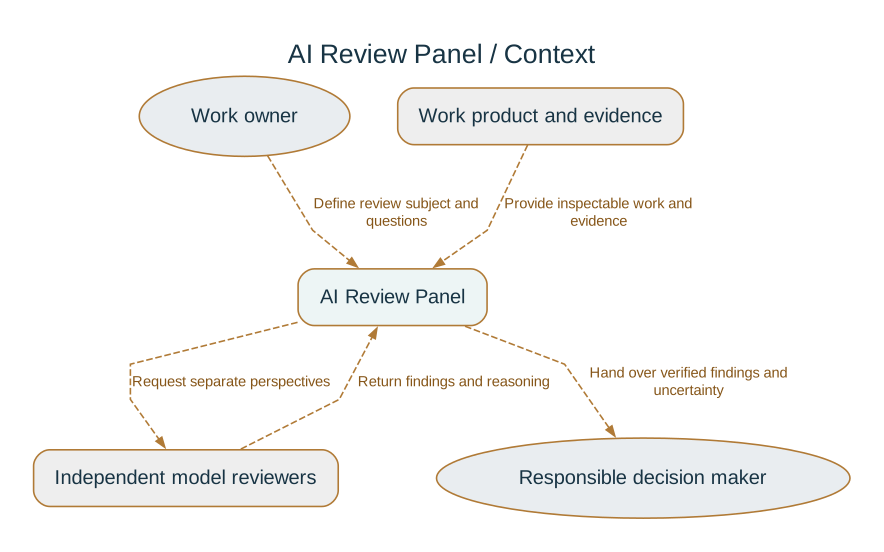
The service checks the availability of registered agents and assembles a cross-vendor panel. A reviewer then challenges, deduplicates and ranks the findings so the result is more useful than a collection of separate responses.
The service records which vendor families contributed. If fewer than two families participate, it marks the result as degraded. This makes the composition of the panel visible rather than assuming that several agents necessarily provide independent perspectives.
Different perspectives, checked findings
What one review revealed
In a recorded review, proposed findings were checked and given distinct dispositions: changes folded into the work, an issue resolved through a documented contract, and an item deferred.
The changes included tests, renaming and documentation as well as fixes. The value of the example lies in tracing each concern through examination to a disposition, rather than counting every initial suggestion as a defect.
From review to collective learning
The panel contributes a checking capability to the collective-intelligence journey. It can help a team learn from proposed changes, but a review panel does not itself authorise deployment or establish that the entire system has improved.
The next direction is to connect reviews more clearly to what follows: which findings changed the work, which changes helped, and which lessons are useful when a similar question returns.